Radon testing for a Lake Country home

Tyndall Bench, our listing, Sotheby's International Realty Canada, full caption
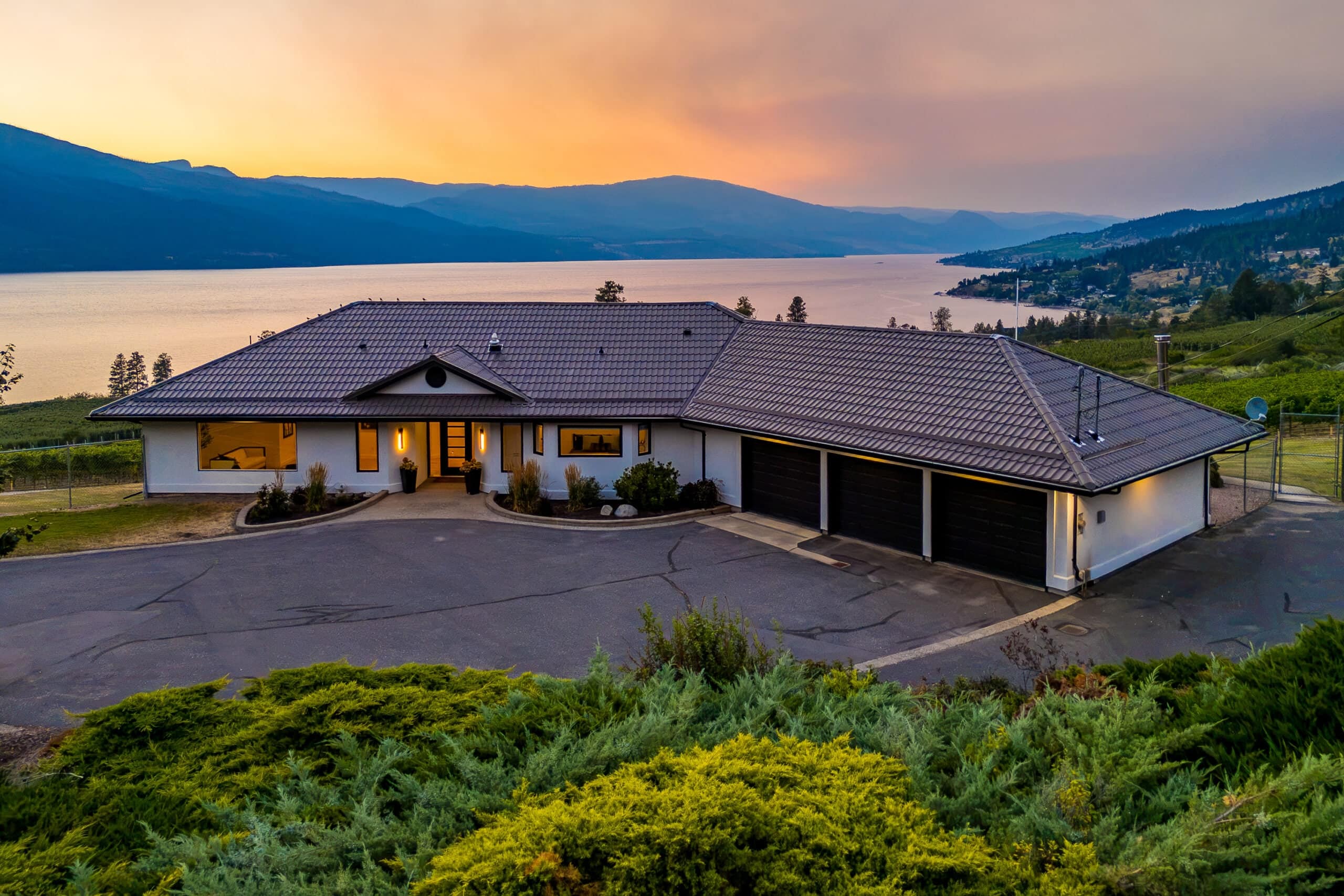
Tyndall Bench at dusk, Lake Country. Lots 1 to 26 Tyndall Road, listed by Tyler Dumaine, Hall Cassie Marshall Group, Sotheby's International Realty Canada. Photograph: Hall Cassie Marshall Group.
Radon is a gas you cannot see or smell, and BC's health authorities ask people in the Interior in particular to test for it. A reliable test takes months, which matters when you are buying. Here is what HealthLink BC, Interior Health and the BC Building Code say, with each source linked.
In short
- A Health Canada survey found 6 to 30 percent of homes in the Interior and Northern health regions above the radon guideline of 200 becquerels per cubic metre.
- A reliable radon test runs at least three months, ideally through the winter, in the lowest level someone uses daily.
- New BC houses with a permit applied for on or after 8 March 2024 must include a radon rough-in under the Building Code.
Sources read . Source links accompany the answers below.
What is radon, and why test for it?
Radon is a colourless, odourless radioactive gas released as uranium in rock, soil and groundwater breaks down. It enters a house mainly through the soil under it, through foundation cracks, construction joints and gaps around pipes and drains.
HealthLink BC calls radon the leading cause of lung cancer for non-smokers. Health Canada's guideline is 200 becquerels per cubic metre: above that average, it recommends reducing the level.1
Is radon a concern in the Okanagan?
HealthLink BC reports a Health Canada survey that found 6 to 30 percent of homes in the Interior and Northern health regions above the 200 guideline, and it especially encourages people in Interior communities to test.
Levels vary from house to house, even on the same street. Interior Health is plain about it: low levels next door do not mean a house is low. The only way to know is to test the house itself.1
How do you test a house for radon?
Use a long-term test. Interior Health says at least three months (91 days), ideally in winter; HealthLink BC says three months to a year, including some winter months. Short tests of 2 to 7 days are not recommended, because radon swings over a day.
Place the detector in the lowest level of the house that someone uses for more than four hours a day, then mail it to the lab. HealthLink BC puts a do-it-yourself detector and its result at about $30 to $50. Certified professionals are listed by the Canadian National Radon Proficiency Program.2
How does radon fit into buying a home?
A three-month test rarely fits between an accepted offer and possession. Ask whether the house has been tested, when, and on which floor, and ask to see the result.
If it has not been tested, plan to run a long-term test in your first fall or winter there. Under the Building Code bulletin, testing is the owner's responsibility once a house is occupied; the Code itself requires none. Retest after work that changes the envelope or ventilation, such as new windows, a finished basement or a new heating system.3
Do new houses in BC have to deal with radon?
Yes. For a house whose building permit was applied for on or after 8 March 2024, the BC Building Code requires a rough-in for a subfloor depressurization system: a gas-permeable layer under the slab connected to a pipe ready for a fan. The Code does not require the fan itself.
For a newer house or a build on a Lake Country lot, ask whether the rough-in is in and where the pipe runs.3
What if a radon test comes back high?
Interior Health names active soil depressurization, a fan that draws radon from under the slab and vents it outside, as the best and most permanent way to reduce it, at between $350 and $3,000 depending on the house.
Test again after the work to confirm the level came down.2
Sources
- HealthLink BC File 42, Radon in homes and other dwellings.
- Interior Health, Radon gas.
- Province of BC, Building Code bulletin B24-03, Radon rough-in requirements.
As published by HealthLink BC, Interior Health and the Province of BC, read 12 November 2026. A test of the house itself is the only way to know its level.
If your question is not answered here, ask me.
Contact Tyler